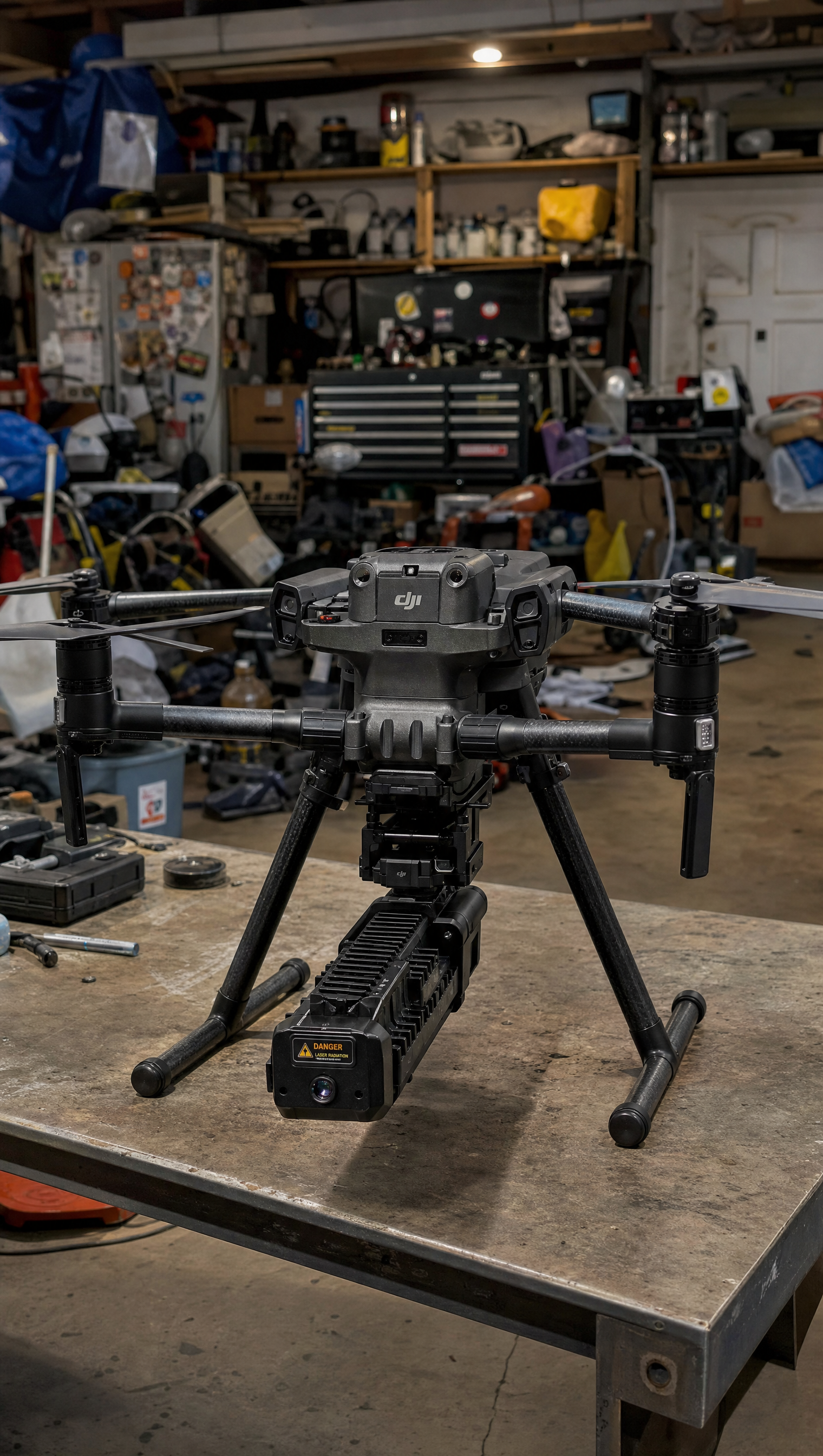
Flyguard is a DJI-borne autonomous patrol that watches the herd, identifies blood-feeding horn flies in real time, and neutralizes them with a precision laser — while cattle and people are treated as protected entities the system will never fire near.
Xinjiang is one of China's great pastoral regions — and one of the fastest-growing cattle and dairy frontiers in the country. Where there are cattle on open range, there are biting flies. Here is why that matters.
The Xinjiang Uyghur Autonomous Region holds tens of millions of head of livestock across the Ili Valley, Altay, Tacheng and the Junggar/Tarim basin margins. State investment has driven a wave of large-scale dairy "megafarms" around Shihezi, Urumqi and the northern grasslands, concentrating cattle at densities where fly pressure compounds quickly.
The horn fly (Haematobia irritans) is a small blood-feeding fly that lives almost permanently on its host, taking 20–40 blood meals per day. Hundreds to thousands can ride a single animal. Related biting Diptera — stable flies, face flies, biting midges — add to the load across Xinjiang's warm, dry summers.
Horn flies are among the costliest external parasites of pasture cattle worldwide. Heavy infestations cut weight gain, suppress milk yield, stress animals, damage hides, and help transmit pathogens. Globally the losses run into the billions annually; in concentrated production regions like Xinjiang the per-herd impact is significant.
A single airframe closes the loop from see to safe shot many times a second — and refuses to fire the instant any safety condition is unmet.
The DJI aircraft flies a geofenced lawnmower/perimeter route over the pasture at low altitude, holding to scan cattle clusters. Geofence, low-battery, GPS-loss and link-loss failsafes always preempt the mission and return the aircraft home.
A YOLOv11 detector with multi-object tracking runs on the onboard computer, distinguishing horn flies from cattle, people and other insects, and following each fly with a stable track ID and motion estimate.
A pinhole-calibrated solver converts a fly's pixel position into gimbal pan/tilt with lead, confirms the beam is settled on target, and reads range from a downward sensor to keep every shot inside a safe window.
Firing is authorized only when every independent interlock passes — armed, in geofence, no person in frame, target confirmed a fly clear of cattle eyes, range valid, beam on target, duty-cycle and dead-man heartbeat OK. Any doubt fails safe.
Operators watch an annotated live feed with telemetry, the green/red interlock panel, a full fire-and-refusal log, and ARM / DISARM / E-STOP controls reachable at all times.
Every shot and every refusal is written to a hash-chained log with the full interlock snapshot — a forensic record for safety review and accountability.
Representative figures from the operating program. The fleet runs the same safety-interlocked control core that ships in the open-source repository.
Flyguard involves a laser and an autonomous aircraft. These are not optional notices. Treat the operating area as a controlled hazard zone.
The targeting laser is a Class 3B/4-class device. Direct or reflected beam exposure can cause instant, permanent blindness in humans and animals. Never look toward the payload while armed. Reflections off metal, water troughs, tags or glass are also hazardous.
If a person — or any unintended subject — is detected, firing is inhibited; but you must not rely on this as primary protection. Keep all people, pets and untargeted animals out of the operating envelope. Authorized, eye-protected personnel only.
A hardware E-STOP and the GCS E-STOP must be within reach of a trained operator at all times. E-STOP latches and hard-offs the emitter from any state. A human must remain in the loop — never leave an armed system unattended.
Operating a drone — and especially carrying an energy payload that can cause injury — is heavily regulated and may be prohibited in your jurisdiction. Weaponizing a drone is a crime in many countries. Obtain all required authorizations before any flight; pointing lasers at aircraft is illegal everywhere.
Real emission requires laser-product compliance (e.g. IEC 60825 / FDA 21 CFR 1040), a Nominal Ocular Hazard Distance analysis, a qualified Laser Safety Officer, and adherence to animal-welfare obligations. Directing energy near livestock carries welfare and liability duties.